

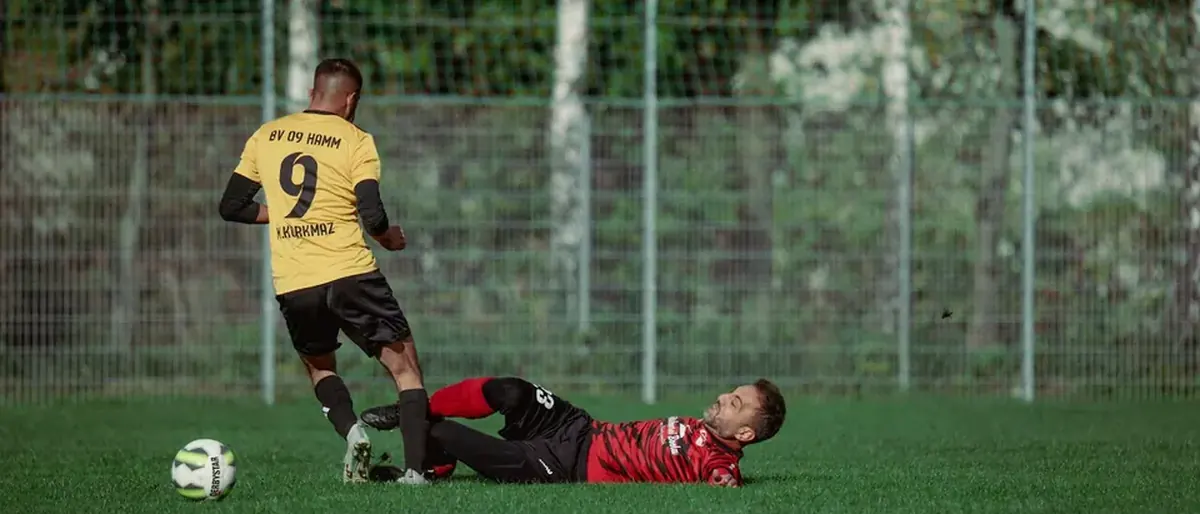
Tactical Fouls: Strategic Use to Disrupt Opponent Attacks
In modern football, the line between cynical gamesmanship and calculated strategy is often blurred by a single, deliberate action: the tactical foul. Far from being a mere act of desperation, the tactical foul has evolved into a sophisticated tool employed by elite managers to reset defensive structures, kill counter-attacking momentum, and protect precarious leads. While purists decry it as a stain on the sport’s fluidity, data analysts and coaches view it as a necessary, albeit risky, component of match management. This pillar analysis dissects the mechanics, risks, and strategic rationale behind the tactical foul, examining how it fits within broader tactical frameworks like the 4-3-3 and 4-2-3-1 formations, and why its effective use can be the difference between a title challenge and mid-table mediocrity.
The Anatomy of a Tactical Foul: Intent vs. Consequence
At its core, a tactical foul is a premeditated infringement committed to stop a promising attacking move before it develops into a clear scoring chance. This differs sharply from a reckless or mistimed tackle born of poor technique. The intent is not to injure or to win the ball cleanly, but to disrupt rhythm. Common scenarios include pulling back an opponent’s shirt during a fast break, tripping a winger who has just beaten a full-back, or deliberately handling the ball to stop a through-pass.
The consequences are a calculated trade-off. The offending team concedes a free kick in a non-threatening area, typically in the middle third or wide positions, and the player risks a yellow card. However, the reward—preventing a potential one-on-one with the goalkeeper or a numerical overload in transition—often outweighs the punishment. Data from top European leagues consistently shows that teams executing tactical fouls in the early stages of counter-attacks concede fewer high-quality chances, as measured by Expected Goals (xG) against. The strategic cost is a temporary loss of possession and a set-piece scenario that the defending team can organize for, rather than facing a chaotic, open-field sprint.
Strategic Rationale: Defending Space and Phase Transitions
The tactical foul is most valuable during the defensive transition phase—the moment a team loses possession and must reorganize. In formations like the 3-5-2 or 4-2-3-1, where wing-backs or wide attackers push high, the space behind them is vulnerable. A well-timed tactical foul by a central midfielder or center-back allows the entire defensive block to retreat, reset its shape, and deny the opponent access to dangerous central areas.
Consider a team defending a narrow lead in the final twenty minutes. The opponent is committing numbers forward. A quick turnover in midfield can leave the defending side’s backline exposed to a three-on-three or four-on-three situation. Here, a tactical foul from a holding midfielder—often the team’s designated “breaker”—is a pre-approved maneuver. The manager’s instruction is clear: “If you cannot win the ball cleanly, stop the play.” This approach is particularly prevalent in high-pressing systems where PPDA (passes per defensive action) is low, meaning the team engages aggressively but risks being bypassed. The tactical foul becomes the safety valve, preventing the high press from being exploited by a single vertical pass.
Risk Management: The Yellow Card Calculus
The primary risk associated with tactical fouls is disciplinary. Accumulating yellow cards early in a match can force a player to moderate his aggression, effectively neutering his defensive contribution. A defender or defensive midfielder on a booking becomes hesitant to commit, turning a tactical strength into a vulnerability. This creates a strategic dilemma for the coach: when to instruct a player to take one for the team, and when to accept a dangerous transition.
Elite teams manage this through role specialization. A center-back in a 4-3-3 system, for instance, may be designated as the “last man” who should never commit a tactical foul unless it is a goal-saving intervention. Meanwhile, a deep-lying playmaker or box-to-box midfielder may be given more freedom to disrupt play, accepting a higher yellow card count in exchange for protecting the defensive line. The calculus also involves the opponent’s set-piece threat. If the team conceding the foul is weak at defending dead-ball situations, the risk of a tactical foul increases, as the resulting free kick may be as dangerous as the transition it prevented. This nuanced decision-making separates top-tier tactical setups from reactive, undisciplined ones.
Tactical Fouls and Formation Vulnerability
Different formations exhibit varying levels of vulnerability to counter-attacks, and thus different appetites for tactical fouling.
| Formation | Primary Vulnerability | Typical Tactical Foul Profile | Risk Level |
|---|---|---|---|
| 4-3-3 | Wide spaces behind full-backs when wingers fail to track back | Central midfielder fouls to stop lateral switches or through-balls behind full-backs | Moderate |
| 4-2-3-1 | Gap between midfield and defensive lines during transition | Double pivot (two holding midfielders) commits fouls to break up plays in central zones | High |
| 3-5-2 | Channels between wing-backs and center-backs | Wing-backs or central midfielders foul to prevent diagonal runs into half-spaces | Very High |
In a 4-2-3-1, the two holding midfielders are the primary tactical foul enforcers. Their positioning between the lines allows them to react quickly to turnovers. However, if both are booked, the team’s defensive solidity collapses, as neither can press aggressively without risking a red card. In contrast, a 4-3-3 with a single pivot relies on that player to be more selective, often fouling only in the most dangerous transitions. The 3-5-2, with its numerical advantage in midfield, can afford more fouls from its wing-backs, who are less critical to central defensive structure but crucial to wide cover.
The Ethical and Regulatory Landscape
While tactical fouling is legal within the laws of the game, it exists in a gray area of sportsmanship. Governing bodies have attempted to curb its prevalence, particularly the “professional foul” where a player denies an obvious goal-scoring opportunity. The introduction of the double-jeopardy rule—where a penalty and red card are not automatically given if the defender made a genuine attempt to play the ball—has slightly reduced the penalty for tactical fouls inside the box. Outside the box, however, the deterrent remains a yellow card and a free kick.
Critics argue that tactical fouling undermines the spectacle, rewarding negative tactics and punishing creative play. Proponents counter that it is a legitimate defensive art form, requiring intelligence, timing, and discipline. The debate often centers on the interpretation of “cynical” versus “necessary.” A sliding tackle from behind that takes the player before the ball is widely condemned, but a subtle shirt pull that stops a runner is often seen as a savvy move. The inconsistency in refereeing decisions adds another layer of complexity, as a team’s tactical plan can be undone by a referee who issues early yellow cards for minor infractions.
Case Study: The Midfield Protector
A classic example of tactical foul deployment comes from a team employing a 4-3-3 against a 4-2-3-1 opponent. The opponent’s attacking midfielder, operating in the gap between the lines, receives the ball on the half-turn. If the central midfielder closes down and the attacking midfielder slips a pass to a runner, the defensive line is exposed. The tactical foul here is committed by the nearest midfielder before the pass is played, typically by a slight body check or a pull on the arm. The free kick is in the center circle, a low-danger area. The offensive team loses momentum, the defensive team reorganizes, and the game resets. This pattern repeats multiple times per match, often going unnoticed by casual viewers but meticulously tracked by analysts using metrics like “fouls per defensive action” and “xG prevented by fouls.”
This approach is not without its limitations. Over-reliance on tactical fouls can lead to a team becoming predictable and vulnerable to set-piece specialists. Opponents may deliberately draw fouls in dangerous wide areas, knowing the defending team’s tendency to commit. Furthermore, a player with a yellow card becomes a target for the opposition, who may seek to exploit his reduced aggression by running directly at him.
Conclusion: A Necessary Evil in the Tactical Arsenal
The tactical foul is not a sign of defensive weakness but a reflection of strategic intelligence. When executed with precision and discipline, it disrupts the rhythm of the most potent counter-attacks, protects vulnerable defensive structures, and allows a team to dictate the tempo of a match. Its effectiveness depends on a complex interplay of formation, player discipline, opponent tendencies, and refereeing interpretation. As the game continues to evolve with data-driven analysis, the tactical foul will remain a contentious yet indispensable component of the modern coach’s toolkit. For bettors and analysts, understanding when and why a team employs tactical fouls offers deeper insight into match dynamics than raw possession or shot counts ever could.
Responsible Gambling Note: Sports betting involves financial risk. Past statistical patterns, including data on tactical fouls and match outcomes, do not guarantee future results. Always bet responsibly and within your means.
For further reading on defensive structures and transition patterns, explore our analysis of tactical analysis, set-piece analysis, and attacking transition patterns.